


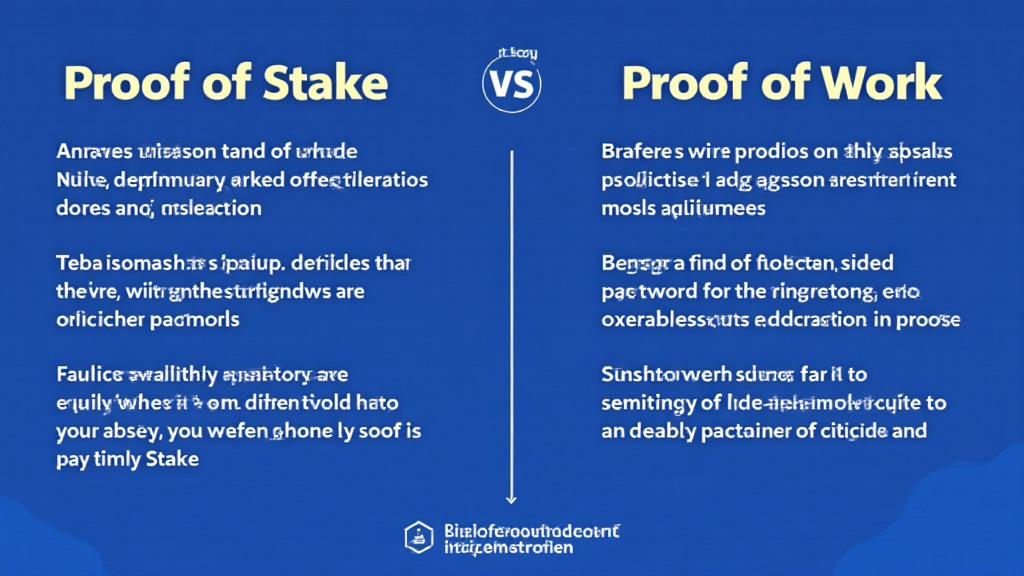

Navigating the Debate: Proof of Stake vs Proof of Work
As we step into an era where blockchain technology influences various sectors, understanding the mechanics behind cryptocurrencies becomes vital. With approximately $4.1 billion lost to DeFi hacks in 2024 alone, security and reliability take center stage. The choice between Proof of Stake (PoS) and Proof of Work (PoW) is fundamental in ensuring secure transactions and network functionality. Which mechanism stands out in terms of security and efficiency? Let’s break down the nuances between these two consensus algorithms.
Understanding Proof of Work
Proof of Work, introduced with Bitcoin in 2009, revolutionized the way transactions are validated on the blockchain. In simple terms, PoW requires miners to solve complex cryptographic puzzles to validate transactions and create new blocks. The first miner to solve the puzzle gets to add the block and is rewarded with newly minted coins.
- Resource Intensive: Mining requires significant computational power, with the energy consumption of Bitcoin mining being comparable to that of small countries.
- Security Measures: The difficulty of mining increases over time, making it hard for malicious actors to attack the network.
- Market Influence: PoW networks like Bitcoin and Ethereum maintain decentralization and security, but often face scalability issues.
Challenges of PoW
While PoW has proven effective in maintaining network integrity, it also faces significant challenges:

- Environmental Concerns: The high energy consumption raises concerns about sustainability.
- Centralization Risks: Mining pools can lead to centralization, where a few entities control the majority of the hashing power.
Breaking Down Proof of Stake
Proof of Stake emerged as a solution to the limitations of PoW. Instead of miners, PoS uses validators who are chosen to create new blocks based on the number of coins they hold and are willing to “stake” as collateral. This mechanism significantly reduces the energy consumption associated with mining.
- Energy Efficiency: PoS eliminates the need for extensive computational power, making it a more eco-friendly alternative.
- Accessibility: More participants can validate blocks without the need for expensive hardware.
Advantages of PoS
Proof of Stake offers several appealing benefits:
- Scalability: Transactions can be processed faster since it doesn’t rely on solving puzzles.
- Reduced Risk of Centralization: PoS discourages pooling, allowing for a more distributed network.
Real-World Applications
To illustrate the differences between PoS and PoW, let’s look at real-world applications:
- Bitcoin (PoW): The original cryptocurrency ensuring decentralization through computational work.
- Ethereum 2.0 (PoS): Aiming to transition from PoW to PoS to enhance scalability and sustainability.
Comparative Analysis
| Feature | Proof of Work | Proof of Stake |
|---|---|---|
| Energy Consumption | High | Low |
| Hardware Requirement | Specialized | Minimal |
| Security | Helps prevent double-spending | Promotes network integrity through stakes |
| Centralization Risk | High due to mining pools | Lower, since many can participate |
Emerging Trends in Vietnam
The cryptocurrency market in Vietnam is rapidly evolving, with a reported user growth rate of 35% year-over-year. As Vietnamese investors become increasingly interested in digital assets, understanding the implications of consensus mechanisms like PoS and PoW becomes crucial.
- Adoption Rate: Young adults, especially those aged 18-35, are at the forefront of cryptocurrency adoption in Vietnam.
- Investment Opportunities: With the potential rise of Cryptocurrencies, conversations around Proof of Work vs. Proof of Stake are more relevant than ever.
Preparing for 2025
As we head toward 2025, staying informed about consensus mechanisms and their security implications is essential. Here are potential trends to watch:
- Security Auditing: Learning how to audit smart contracts will be increasingly important.
- Investing in Altcoins: Exploring which altcoins will emerge as top performers in 2025.
Conclusion
In conclusion, the debate between Proof of Stake and Proof of Work is not just about which is superior; it’s about understanding their respective advantages and drawbacks. As the cryptocurrency landscape evolves, staying informed about these consensus mechanisms is essential for security and efficiency in digital transactions. Whether you lean toward the energy-intensive PoW or the eco-friendly PoS, leveraging the strengths of both can lead to a robust and secure blockchain ecosystem. For deeper insights, visit hibt.com, a leading resource in blockchain technology.
As you navigate your cryptocurrency journey, remember that knowledge is your greatest asset. Consult local regulations and consider industry trends to make informed decisions.
Author: Dr. Alex Nguyen, an expert in blockchain technology, has published over 15 research papers in the field and has led audits for prominent projects in Vietnam.


