


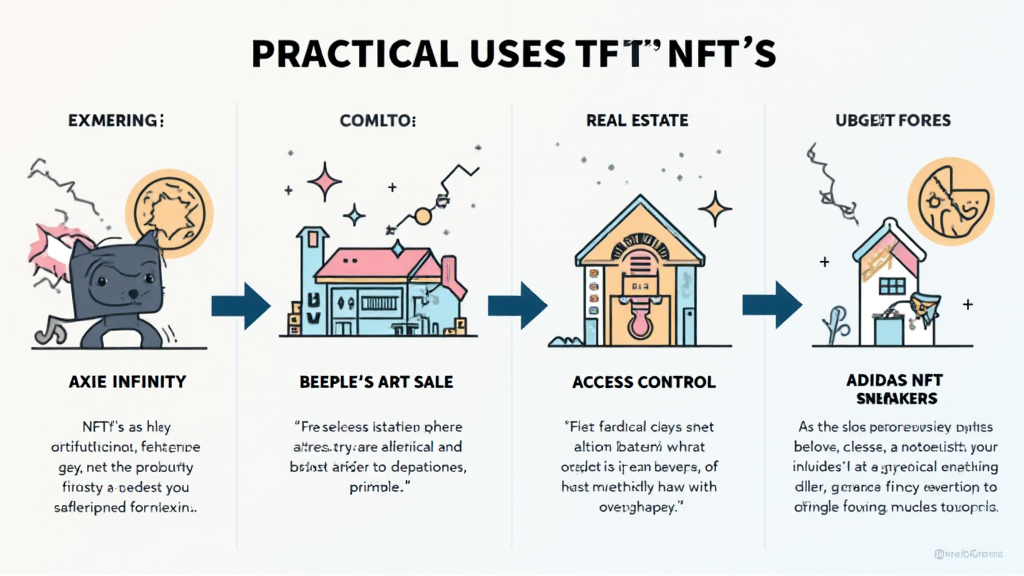

Introduction
As the digital landscape evolves, Non-Fungible Tokens (NFTs) are redefining ownership and engagement across various sectors. According to a report from DappRadar, the NFT market surged to a staggering $25 billion in sales in 2021. With this explosive growth, the question remains: what are the practical uses of NFTs beyond mere digital collectibles? In this article, we will delve into NFT utility examples that illustrate their expanding role in technology, economy, and daily life.
Understanding NFT Utility
NFTs are unique digital assets verified by blockchain technology, offering the ability to prove ownership and authenticity. This uniqueness allows for diverse utilities, ranging from gaming assets to digital identity. Here’s where NFTs really shine:
- Provenance Tracking: Each NFT records its history on the blockchain, making it simple to track ownership.
- Programmable Features: Smart contracts add functionality, allowing NFTs to be more than just static assets.
- Interoperability: NFTs can bridge different platforms, enhancing their value across ecosystems.
NFT Utility in Gaming
Gaming is one of the fastest sectors to adopt NFTs, leveraging them to provide players with ownership of in-game assets. Imagine you’ve earned a rare sword in a game; with NFTs, you can truly own it and even sell it outside the game!

According to gamesindustry.biz, over 75% of gamers expressed interest in owning in-game items as NFTs.
Examples of NFT utility in gaming include:
- Axie Infinity: Players own unique creatures (Axies) and can trade them as NFTs, with some selling for thousands of dollars.
- The Sandbox: Users create and monetize virtual assets, owning land and items as NFTs.
- Gods Unchained: This trading card game allows players to genuinely own, trade, and sell their cards as NFTs.
NFTs in Art and Collectibles
The art industry has embraced NFTs, enabling artists to sell their work digitally while retaining provenance and authenticity. The high sales figures of NFT art highlight this trend:
In March 2021, Beeple’s NFT artwork sold for an astounding $69 million.
Noteworthy examples include:
- CryptoPunk: One of the first NFT art projects, CryptoPunks have reached valuations over $11 million!
- Bored Ape Yacht Club: This collection of unique apes not only serves as digital art but as membership for exclusive club benefits.
- Rumble Kong League: A sports-themed NFT project that merges art and gaming with competitive gaming.
Real Estate Powered by NFTs
Real estate is taking a monumental step into the digital frontier with NFTs. These assets can represent property ownership or real estate rights. This innovation streamlines transactions and enhances transparency. For instance:
- Propy: A real estate transaction platform that allows buyers to purchase properties using cryptocurrencies through NFTs.
- Real Estate Investment Platforms: Some platforms allow users to buy fractional ownership in properties through NFTs, lowering the entry barrier.
NFTs and Membership Access
NFTs can serve as digital keys, granting exclusive access to events, clubs, and services. This opens new avenues for engagement. Here are a few examples:
- Adidas and NFT Sneakers: Owners of particular NFT sneakers have unique access to limited-edition drops and events.
- Social Tokens: Creators use NFTs to offer unique fan experiences, from personal interactions to exclusive content.
Examples of NFT Utility in Emerging Markets
Emerging markets, particularly in regions like Vietnam, are seeing a rise in NFT adoption. The Vietnamese community has embraced NFTs, with a growing market for digital collectibles and art. The Vietnamese NFT community experienced a growth of approximately 150% in 2021, driven by local artists and developers looking to innovate.
Future Projections and the Role of NFTs
Looking ahead, the future of NFTs appears bright. By 2025, analysts predict NFTs will play a crucial role in digital commerce, merging with areas like gaming, fashion, and the metaverse. Emerging applications include:
- Virtual reality experiences that incorporate NFT ownership.
- More stringent tiêu chuẩn an ninh blockchain to enhance the security of NFT transactions.
- Innovations in integrating NFTs into loyalty programs for businesses.
Conclusion
NFT utility examples are numerous and diverse, showcasing their potential to transform various industries beyond digital art and collectibles. From gaming to real estate and membership access, NFTs present unique value propositions that enhance user engagement, ownership, and experiences. As we explore these frontiers, one thing is clear: NFTs are here to stay and will continue to evolve and shape our digital future.
For more insightful articles on cryptocurrency exploring topics such as 2025年最具潜力的山寨币 and how to audit smart contracts, visit cryptolearnzone.


