



Introduction
As the realm of digital currencies and blockchain technology continues to evolve, the concept of Decentralized Autonomous Organizations (DAOs) has emerged as a groundbreaking mechanism for governance. In 2023 alone, it was reported that over $2 billion had been locked in various DAO contracts. With users increasingly gravitating toward decentralized solutions, understanding DAO governance models becomes critical for both users and developers alike. This article aims to explore different DAO governance models, evaluate their operational mechanisms and provide insights into their effectiveness in comparison to traditional governance structures.
In this analysis, we will break down the intricacies of DAOs, their evolution, and their potential future impact on various industries, including insights pertinent to the Vietnamese market, where the user growth rate in the crypto sector reached 24% in 2022.
Understanding DAOs and Governance
DAOs represent a new organizational structure, where governance is decentralized, often managed through smart contracts deployed on blockchain networks. Simply put, they function similarly to traditional companies but operate without a centralized authority, relying on community consensus.
- What is a DAO?
A DAO is a digital organization governed by rules encoded as computer programs that are executed by blockchain technology. Decision-making is done collectively by members, usually through a voting mechanism.
- Importance of Governance in DAO
Effective governance in DAOs is crucial because it determines how decisions are made, such as funding proposals, changes in protocol, or management of resources.
- Why is Governance Different in DAOs?
Unlike traditional corporate governance, where stakeholders have varying degrees of influence based on share ownership, DAOs typically operate on a one-member-one-vote basis, ensuring equitable decision-making.
Common DAO Governance Models
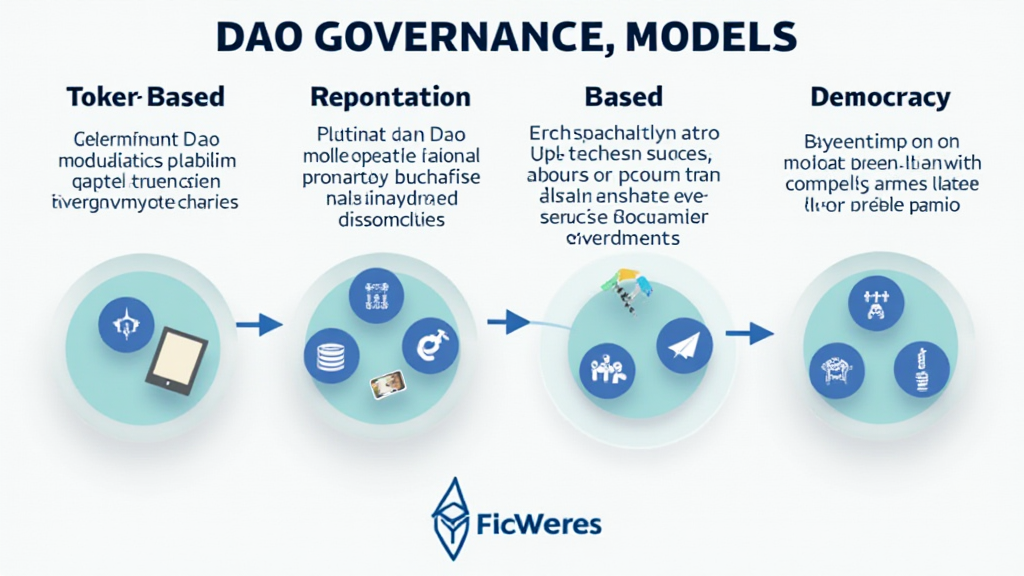
There are several models of governance that can be adopted by DAOs. Each model presents unique benefits and challenges.
- Token-Based Governance
In this model, the rights to vote are distributed based on the number of tokens held by a member. More tokens equate to more voting power. This is advantageous in promoting engagement among investors but can lead to centralization if wealth is concentrated.
- Reputation-Based Governance
Voting power is determined by a member’s reputation, not the number of tokens held. This system rewards long-term contribution over mere financial investment, fostering a community-centric atmosphere.
- Liquid Democracy
Combining direct and representative democracy, members can vote directly on issues or delegate their voting power to others they trust. This model aims to blend efficiency with accountability.
Evaluating DAO Governance Effectiveness
To gauge the effectiveness of various DAO governance models, it’s essential to consider how well they apply to real-world scenarios. Examples from current DAOs demonstrate their functionality in cryptocurrency ecosystems.
- Case Study: MakerDAO
This DAO functions with a token-based governance model, where MKR token holders determine collateral types and risk parameters. Despite challenges around concentration, it showcases adaptability and community involvement.
- Case Study: Aragon
Utilizing a reputation-based model, Aragon empowers users to create their DAOs. This model encourages active participation, leading to robust governance and decision-making.
- Case Study: Synthetix
Synthetix employs a liquid democracy model, allowing users to delegate votes while actively participating in governance. This flexibility increases engagement and optimizes decision-making processes.
Diving Deeper: Challenges and Solutions in DAO Governance
Despite the innovative nature of DAOs, challenges persist. Recognizing these obstacles is essential to maintaining effective governance.
- Voting Power Concentration
One major concern in token-based governance is that it can concentrate power among wealthy holders. Solutions may include implementing a quadratic voting system to balance influence.
- Addressing Voter Apathy
Apathy can lead to low participation rates. Educating members about governance impacts and incentivizing active involvement can mitigate this issue.
- Regulatory Concerns
DAOs navigate an uncertain regulatory landscape. Engaging legal counsel to ensure compliance with local laws (like the evolving Việt Nam blockchain regulations) is critical.
The Future of DAO Governance Models
As DAOs continue to shape the future of organizations, innovations and adaptations to existing governance models are expected. Looking ahead, we anticipate:
- Increased Use of AI
Artificial intelligence may play a role in analyzing member contributions and optimizing decision-making processes.
- Growth in Hybrid Models
Combining various governance structures to suit specific needs may become increasingly common.
- Regulatory Convergence
As regulatory environments become more accommodating, DAOs could gain recognition and support from governments worldwide.
Conclusion
In conclusion, understanding DAO governance models not only equips individuals and developers with the knowledge to navigate the complexities of decentralized organizations but also positions them for greater engagement in a rapidly evolving landscape. The DAO structure, punctuated by its openness and community focus, offers significant benefits over traditional governance, albeit with its own set of challenges. By addressing these challenges proactively and adapting to new circumstances, DAOs have the potential to redefine future organizational governance, especially in emerging markets like Vietnam. This transformative approach not only fosters innovation but also promotes inclusivity and transparency that are vital for the digital age.
As the cryptocurrency world continues to expand, platforms like cryptolearnzone provide essential resources for navigating the intricacies of blockchain governance.
Author: John Smith, blockchain consultant with over 15 published papers on decentralized governance and a leading figure in security audits for multiple top-tier DAO projects.


